Since Covid, I’ve been tracking a metric I made up to monitor my fitness. I call it H2L. Now, with five years of tracking it, I finally feel confident sharing it.
H2L stands for High to Low. On any given day, what is the highest your heart rate hit, and what was your lowest? The difference between those numbers is your H2L.
So what does that actually tell you? Let’s break it down. I’m confident that when you finish reading this, you’ll want to run to your Coros app and calculate your own H2L.
First, for those who don’t know: I’m not a doctor. I have zero medical background in any of what I’m about to share. What I do have is three decades of consistent running, tens of thousands of miles logged, and a zillion personal metrics to pour through. I’ll also note that much of what I’m going to share goes against a lot of what’s popular these days—especially Zone 2 training, something I’ve never been a fan of. Much like Ricky Bobby: I want to go fast.
I want to go fast and push myself as hard as possible. One of the things that drew me to running at a young age was that feeling of being right on the edge. Even now, at 45, almost all my runs end with a negative split, trying to finish each run hard. I want to see that my heart was working. I want to know I worked out.
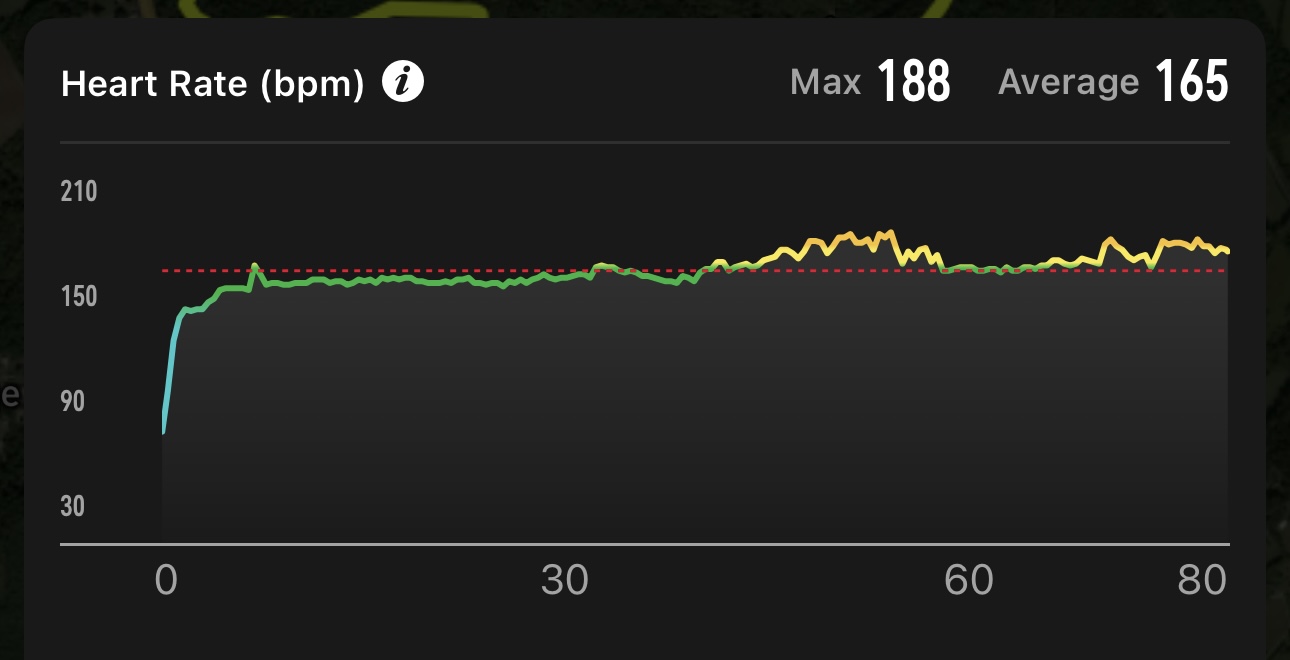
Over time, I’ve found that compared to my peers, I can get my heart rate much higher. I think that’s partly due to how I train. That old “220 minus your age” max-heart-rate suggestion is absolute poppycock to someone who trains consistently and with real vigor. One of the first things I look at when reviewing my watch data is how high my heart rate went at any point during the run. Typically, it’s at the finish when I’m zipping into my mailbox or rounding the last turn on the track. It can also come from the top of an arduous trail climb or during an interval. It doesn’t matter—just take your highest moment and note it.
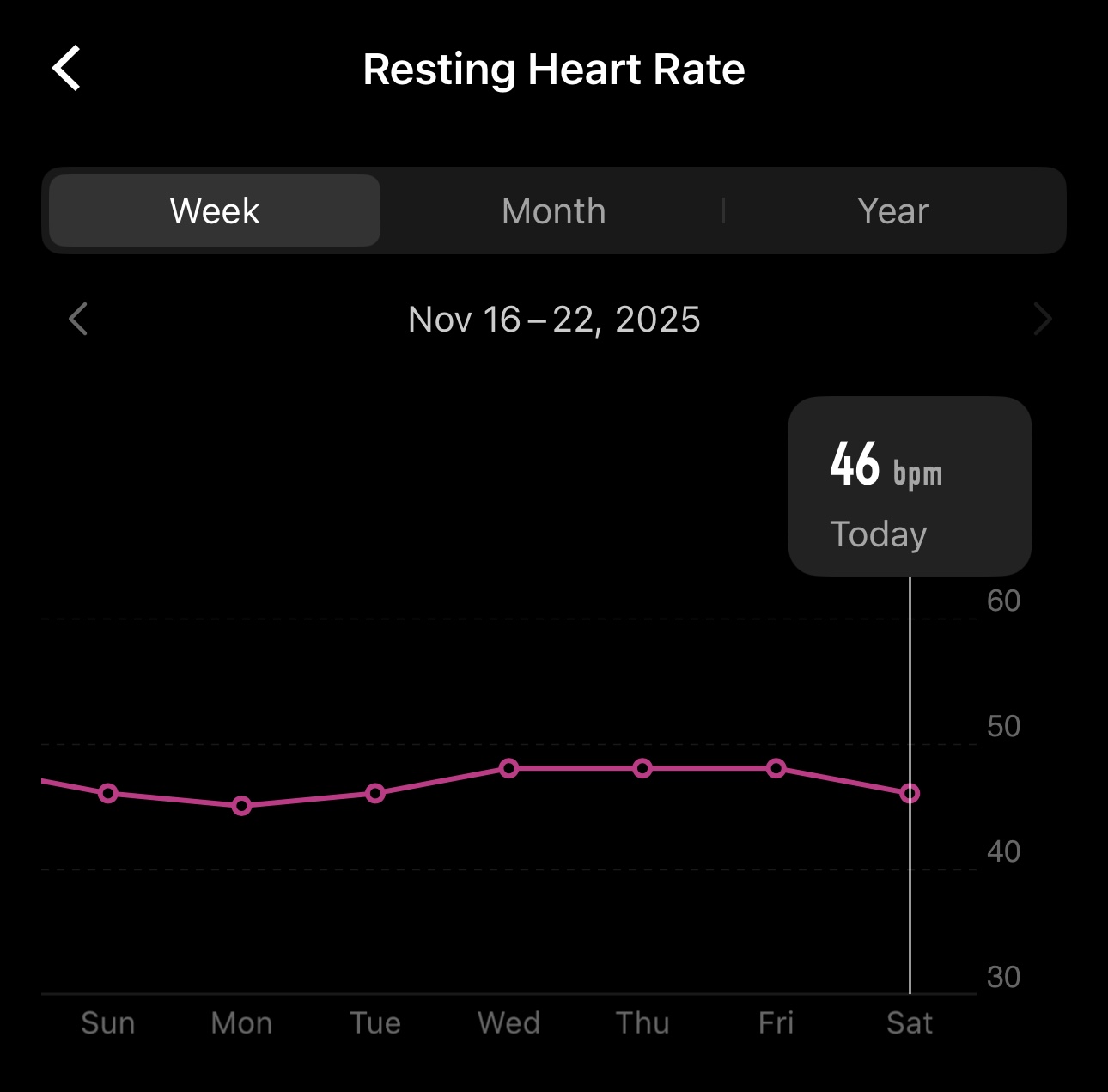
Just as satisfying as a super-high heart rate spike is a low resting heart rate. I used to use my lowest sleeping number as my “low,” but I recently switched to my lowest awake heart rate. It just feels more fair. And let’s be honest: it’s a runner flex when someone in the medical field sees your vitals and says, “You must be an endurance athlete.” It’s the best badge of honor. Conversely, when you’ve been off the grind, eating poorly, or just getting into running, a normal resting heart rate can be 20+ beats higher than a runner’s.
So when I think about H2L, here’s the goal: I want to be so fit that my heart hardly beats at rest. I want to startle my doctor with how efficient my heart is. And I also want to be able to push myself so hard my ears pop and my head gets foggy. I want to see a number on my watch that shows I was redlining. When you hit that high number and subtract a sexy low resting heart rate, you get your H2L. For me, on a good day, I might hit 185 on a trail run with a resting heart rate of 45. That’s a 140 H2L—very solid.
The thing with H2L is that you can have one strong side of the equation, but the spread tells the story. If you’re unfit, you might hit 170 on a run, but if your resting heart rate is 70, your H2L is only 100. If your resting HR is 45 but your heart rate never gets above 130 on a run, that’s a sad 85 H2L. Hitting both ends of the spectrum shows what your heart and body are capable of. I truly believe that decades of pushing myself has allowed my heart and body to recover better and made me a more efficient runner and athlete.
H2L may not be a metric you rely on daily, but over a week, it can shine a light on trends you might otherwise miss. Fatigue, stress, good sleep, bad sleep, being in shape, being out of shape—they all show up in the spread.
I doubt this will ever end up in Runner’s World, but I do have friends who now track it, and we periodically share our H2Ls to see who’s really ready to go. So next time you’re trying to make sense of your overnight HRV or morning readiness score, take a look at your H2L instead. It might help you become a better, more honest version of your running self.